
Blog
Queensland Maple, Reimagined

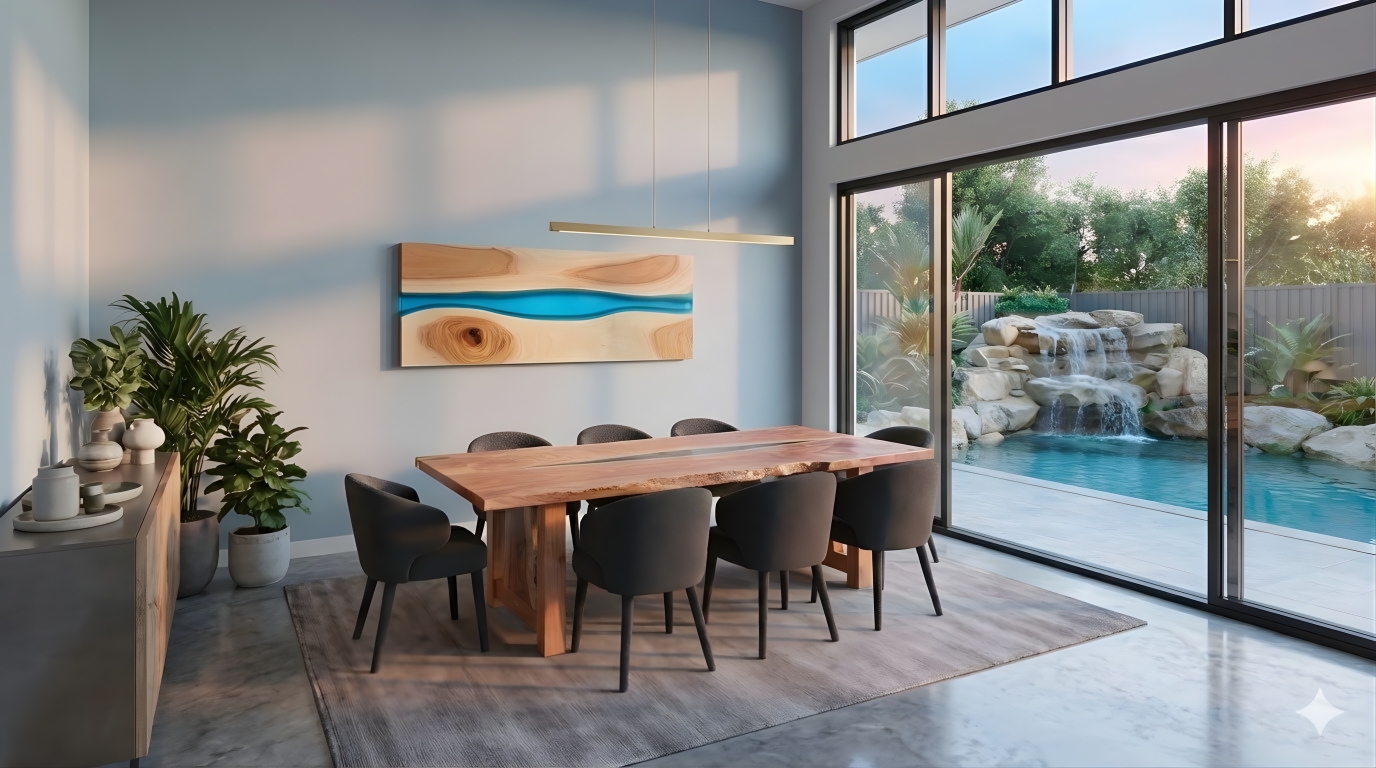
A Freeform Natural Edge Dining Table by David Suters Timbercraftsman
Queensland Maple, Also Known as Silkwood
This Queensland Maple dining table began with two sister slabs of highly figured timber, selected for their shape, movement, and depth of grain. Queensland Maple (Flindersia brayleyana) grows in northern Queensland rainforests and has long been prized for furniture, musical instruments, decorative cabinetry and fine joinery due to its workability and natural lustre.
Queensland Maple is sometimes referred to as Silkwood due to its natural sheen. It works cleanly at the bench and finishes beautifully. Multiple layers of satin clear finish protect this Queensland Maple dining table while allowing the timber to age naturally over time. With use, it will develop a soft patina that reflects family life, gatherings, and shared meals.
Letting the Timber Guide the Design
Availability and Bespoke Options
I was drawn to the fiddleback figuring in these slabs. In natural light, the grain shifts and shimmers as you move around the table. That movement guided the design. Rather than forcing symmetry, I worked with the character already present in the timber.
The natural edges remain intact on either side of each slab, celebrating the tree’s original form. A bevelled, freeform glass centre is set into the surface, framed by subtle resin pockets. These details stabilise the structure while preserving the visual flow of the grain. Nothing is hidden. Every element has a purpose.
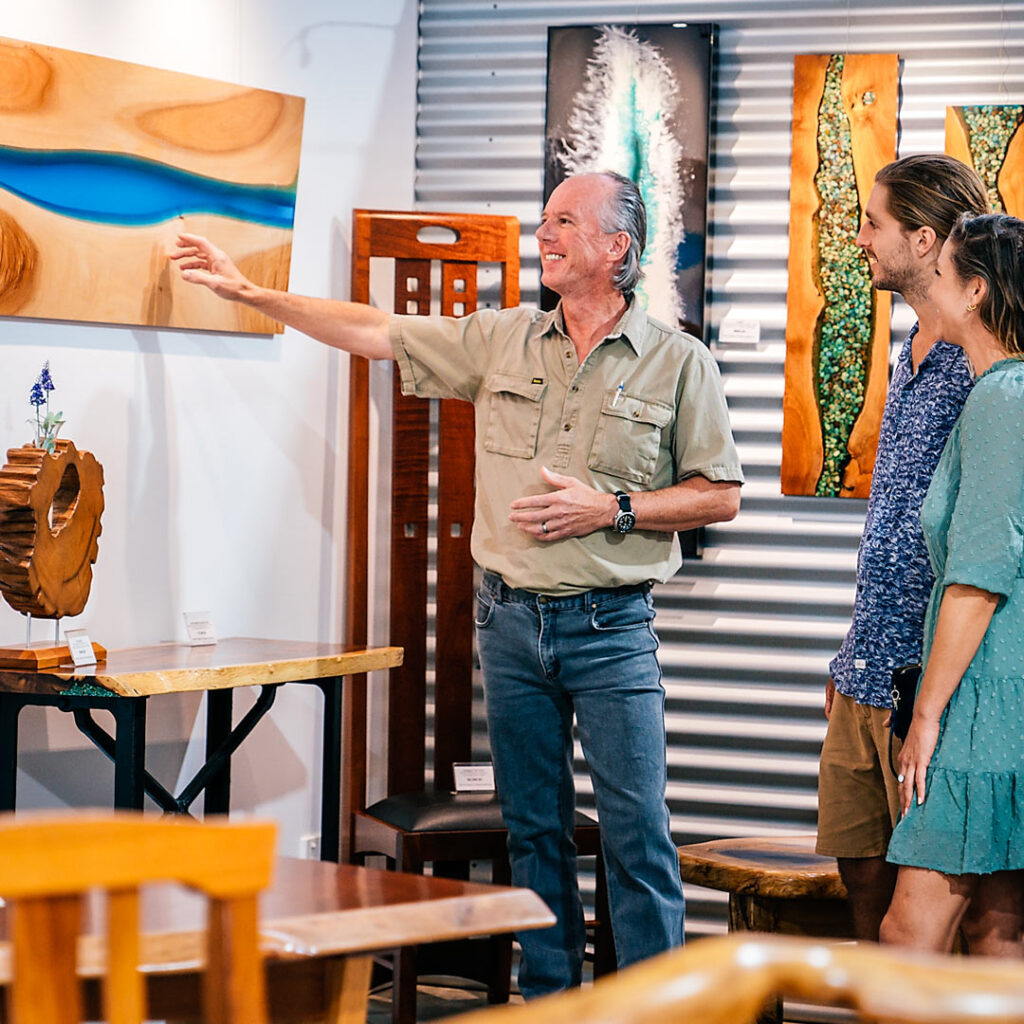
This table, along with the accompanying Queensland Maple timber art panel, is a one-of-a-kind piece. It is currently available to purchase through our Eumundi showroom and gallery, or online via our shop.
Bespoke variations can be commissioned by consultation. Each piece is individually designed and handcrafted, and no two are ever the same.
A Contemporary Interpretation of Refectory Legs
The base is a modern interpretation of refectory legs. Historically, refectory tables were built for monastery dining halls, designed to support heavy tops and constant daily use. This version reworks that heritage with cleaner lines and contemporary proportions, creating a table that feels grounded and architectural without becoming heavy.